Aerial Sightseeing in the Himalayas: A Route-by-Route Guide
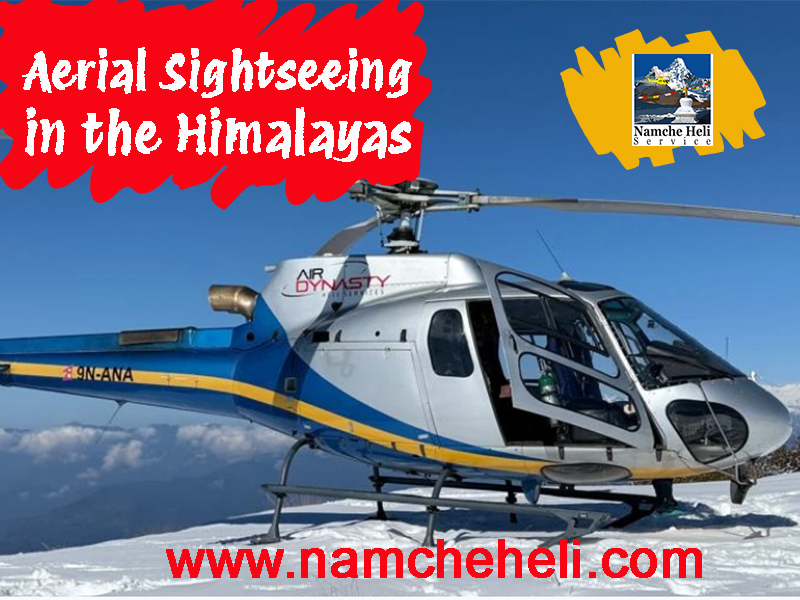
Aerial sightseeing in the Himalayas means something different depending on who you ask. For some travelers, it is a 45-minute loop over the Kathmandu Valley. For others, it means landing at 5,545 meters with Everest close enough to photograph without a zoom lens.
At Namche Heli Service, we get both kinds of inquiries every week. Often, the traveler is not yet sure which one fits their trip. This guide walks through what aerial sightseeing in the Himalayas actually covers.
It looks at which routes get booked the most, and how your choice of flight changes the cost, the itinerary, and what you see from the window.
What Counts as Aerial Sightseeing in the Himalayas?
Not every helicopter flight in Nepal is a sightseeing flight. Some are transfers, moving trekkers between Lukla, Pheriche, or Kathmandu when a fixed-wing flight gets cancelled.
Others are dedicated tours, built entirely around the view. Aerial sightseeing in the Himalayas usually falls into three categories.
There are short scenic loops that never land, tours with a landing at altitude, and hybrid trips that pair trekking with a helicopter segment. Each category suits a different traveler.
Someone with two free hours in Kathmandu wants the first option. Someone chasing a specific photo of Everest wants the second. Someone already on the trail usually wants the third!
Everest Region: The Route Everyone Asks About First
Most of our sightseeing inquiries start with Everest, and for good reason. An Everest helicopter tour typically departs Kathmandu before sunrise. It crosses the foothills and enters the Khumbu within 30 to 40 minutes.
From there, the aircraft climbs past Namche and Tengboche toward Kala Patthar or the base camp area. Passengers get a close view of Everest, Lhotse, Nuptse, and Ama Dablam that would otherwise take 8 to 10 days of trekking to reach.
The full Everest Base Camp helicopter tour runs 4 to 5 hours door to door. Many tours add a breakfast stop at a lodge in Syangboche, where the mountain backdrop does most of the work.
Pilots keep the landing itself short, since staying too long at that altitude adds unnecessary strain.
Trekking with a Helicopter Return: Getting Both Experiences
Not everyone wants to choose between walking and flying. An Everest Base Camp trek with helicopter return lets you complete the classic 12 to 14 day trek up through Namche, Dingboche, and Lobuche.
Instead of walking back down, you skip the repetitive return and fly out. This shaves 2 to 3 days off the total trip. Importantly, it does not cut the acclimatization schedule that makes the trek itself work.
We at Namche Heli Service see this option chosen most by trekkers on a fixed return flight home. It also suits anyone whose knees are not looking forward to a second descent through the same villages.
The trek stays just as demanding as it always was. Only the ending changes!
Beyond Everest: Annapurna, Langtang, and Manaslu from the Air
Everest gets the attention, but it is not the only aerial sightseeing option in Nepal.
Annapurna helicopter tours from Pokhara reach the base camp area in under an hour. They also cost meaningfully less than an Everest landing tour!
Langtang, just north of Kathmandu, offers a shorter flight to Kyanjin Gompa. The glaciated peaks there surprise most first-time visitors.
Manaslu charters serve a smaller, more specialized market, usually photographers and repeat visitors.
For travelers weighing multiple regions, the honest answer is simple. Everest offers the highest peaks, Annapurna offers the better value, and Langtang offers the shortest flight time. Manaslu is possible but requires restricted area permit too.
Flying Down From the Trail: Point-to-Point Transfers
A separate category of aerial sightseeing happens in reverse. Trekkers already high in the Khumbu sometimes decide to fly out rather than walk back.
A Gorakshep to Lukla helicopter flight suits trekkers who want to keep some trekking days intact. It skips only the long return past Base Camp itself.
A Gorakshep to Kathmandu helicopter flight goes further, cutting the return trip down to a single flight. Further down the valley, a Pheriche to Lukla helicopter or Pheriche to Kathmandu helicopter booking suits trekkers who developed altitude symptoms.
Both offer a lower, calmer descent point. From Lukla itself, a standard Lukla to Kathmandu helicopter flight remains the most common finishing move. It gets busy fast when the fixed-wing schedule backs up during peak weeks.
Aircraft, Altitude, and What Actually Keeps Flights Safe
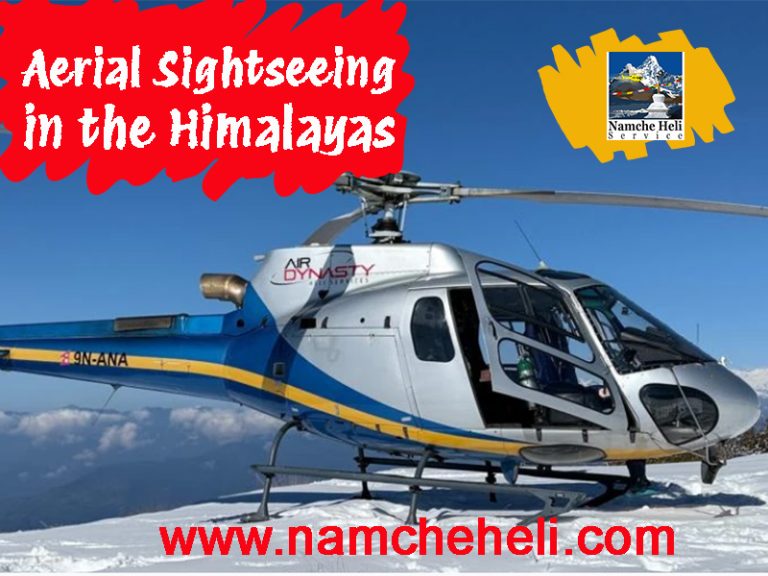
Every route above relies on the same core equipment. Operators fly AS350 B3 series helicopters, built for high-altitude performance, because standard aircraft lose too much lift capacity above 4,000 meters.
Pilots fly early, generally before late morning. Thermal winds build over the Khumbu hillsides as the day warms, and this makes tight helipad approaches harder to judge.
Passengers need no special training to fly. However, anyone landing above 5,000 meters should expect a lightheaded moment for a few seconds.
This passes quickly once the aircraft descends. We flag altitude risk clearly at booking, rather than let it become a surprise mid-flight. An informed passenger handles those few minutes far better than a startled one for sure!
Cost, Season, and Booking an Aerial Sightseeing Flight
Pricing depends heavily on route and format. A shared-seat Everest landing tour runs roughly USD 1,500 to 1,700 per person. A private charter for up to 5 passengers costs more overall, but it can split down to a similar or lower per-person rate for groups.
Annapurna and Langtang tours generally cost less, reflecting the shorter flight time involved.
Spring, March through May, and autumn, October through November, remain the most reliable seasons for clear mountain visibility. On the other hand, Monsoon months bring more delays across every route, Everest included.
Whichever aerial sightseeing option fits your trip, book early with us during peak season. It gives us more room to lock in your preferred date and aircraft, rather than fitting you into whatever slot is left.
Latest Blog Posts
Latest travel tips and blog covering all travel experiences
Aerial Sightseeing in the Himalayas: A Route-by-Route Guide
Aerial sightseeing in the Himalayas means something different depending on who you ask. For some travelers, it is a 45-minute loop over the Kathmandu Valley. For others, it means landing at 5,545 meters with Everest…
Helicopter Transport Nepal: How the Booking Actually Works?
Helicopter transport in Nepal covers a wider range of services than most first-time visitors expect! It is not just Everest sightseeing. It includes mountain charters, trekking transfers, cargo runs to villages with no road access,…