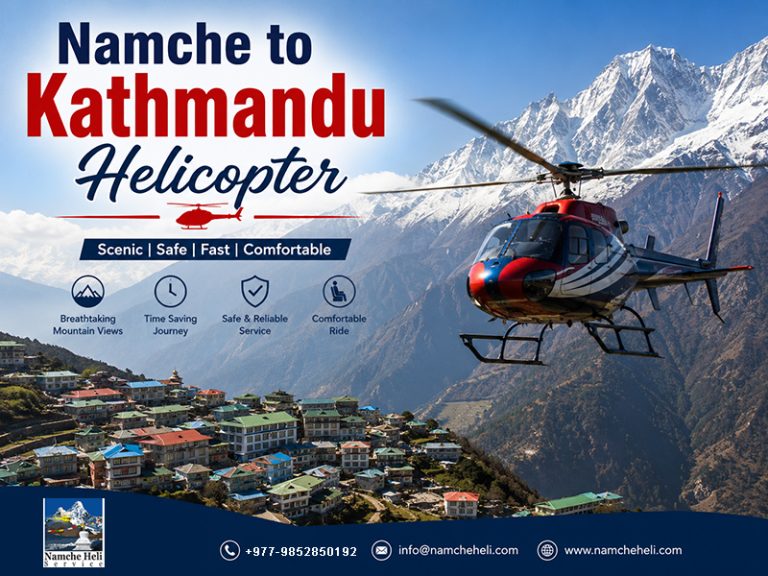
High Altitude Helicopter Nepal: Risks & Limits to Know
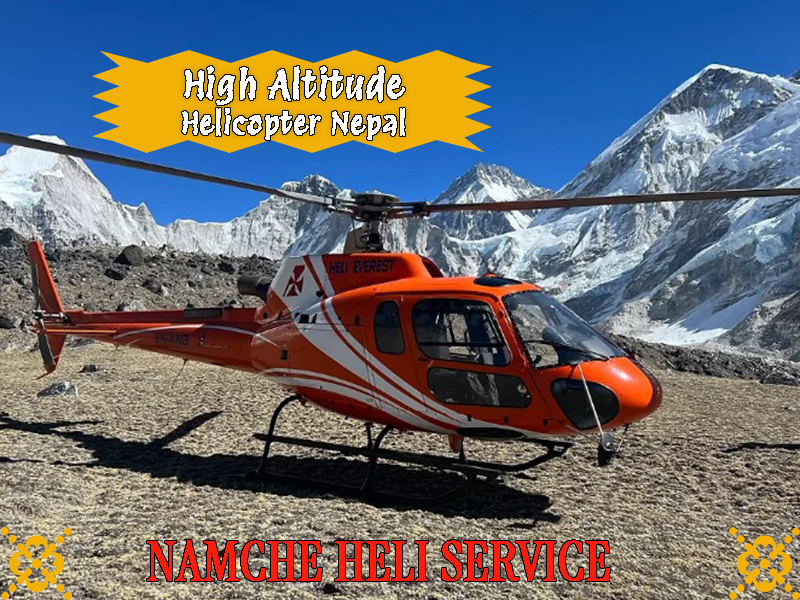
Anyone researching high altitude helicopter Nepal flights is either looking to book a scenic flight and want to know if the altitude itself is dangerous or they are already on the trail, wondering what happens if they need to fly out fast!
We get both kinds of enquiries daily at Namche Heli Service. So, this guide covers the physical reality of flying high in the Himalayas: what changes in the aircraft, what changes in your body, and who should think twice before booking.
Why Thin Air Changes How a Helicopter Flies?
A helicopter does not care about altitude directly! It cares about air density, and the two are closely linked.
As you climb, air molecules spread further apart. The rotor blades bite into less air with every turn. The engine has to work harder for the same lift, and at some point, it simply cannot lift as much weight as it could lower down.
This is why weight limits get stricter the higher a flight goes. A helicopter carrying five passengers and 500 kg total between Kathmandu and Lukla behaves differently once it climbs.
Toward Pheriche or Everest Base Camp, at 5,364 meters, that same aircraft might only carry three passengers, roughly 240 to 250 kg. Larger groups get split into shuttle runs instead of one flight.
That is not a booking preference. It is what thin air allows!
Can You Actually Get Altitude Sickness on a Helicopter?
Yes, and this surprises a lot of first-time flyers.
Trekkers walking to Everest Base Camp gain altitude over a week or more, giving their bodies time to adjust. A helicopter skips that process entirely.
You can be in Kathmandu at 1,400 meters in the morning. Two hours later, you could be standing at Kala Patthar, above 5,500 meters!
That speed is exactly the problem. Oxygen levels at these elevations drop to roughly half of sea-level values.
Your body has had no time to compensate. Research on high-altitude flight consistently points to reduced acclimatization time as the main driver of acute mountain sickness in air travelers, more so than the altitude figure alone.
Headaches, nausea, and dizziness are the common early symptoms. They can appear within minutes of landing.
Who Should Think Twice Before Booking
We are not doctors, so we will not diagnose anyone through a booking form. However, general travel medicine guidance is consistent on a few points worth repeating. People with uncontrolled heart or lung conditions face higher risk from sudden altitude exposure. The same applies to anyone recovering from recent surgery, dealing with severe anaemia, or in advanced pregnancy. Each of these groups should talk to a doctor before flying high.
A prior episode of HAPE or HACE also matters here, since it raises the odds of a repeat. That said, none of this means healthy travelers are guaranteed to feel fine either. Altitude sickness does not care about age or fitness level. It affects marathon runners about as often as first-time trekkers.
Should You See a Doctor Before You Fly?
For a short scenic flight, most healthy adults do not need a pre-trip medical clearance. For anyone with an existing condition, a travel medicine consultation a few weeks before departure is worth the appointment.
The same goes for anyone planning a longer stay at altitude afterward. Your doctor can walk you through preventive options such as acetazolamide and discuss whether it suits your medical history.
They can also confirm your travel insurance actually covers high-altitude evacuation, not just standard medical care back home.
How High Do These Helicopters Actually Go?
Most flights operating as an Everest helicopter tour stay within a defined, well-tested altitude band.
Everest Base Camp sits at 5,364 meters. Kala Patthar, the highest viewpoint most tours land at, reaches about 5,545 meters. A typical Everest Base Camp helicopter tour climbs from Kathmandu or Lukla, lands briefly at one or both points, then drops back down toward Syangboche or Lukla within the same trip.
Helicopters do not fly tourists to the summit of Everest. Routine operations stay well below the Death Zone above 8,000 meters.
Rescue crews have occasionally worked higher, near Camp 2 around 6,400 meters, but only in exceptional conditions. That is emergency work with a stripped-down aircraft, not a passenger flight.
| Location | Altitude | Approx. oxygen vs sea level |
|---|---|---|
| Lukla | 2,860 m | ~65% |
| Namche Bazaar | 3,440 m | ~60% |
| Pheriche | 4,371 m | ~55% |
| Everest Base Camp | 5,364 m | ~50% |
| Kala Patthar | 5,545 m | ~48% |
Why Groups Split Into Shuttles at Altitude?
This is where the weight limits from earlier show up in your actual itinerary.
If your group is flying out from high camps, expect the helicopter to run several short shuttles rather than one full flight.
A Pheriche to Lukla helicopter transfer or a Gorakshep to Lukla helicopter flight often moves passengers down to a lower altitude first. From there, the aircraft can carry a full load onward to Kathmandu.
Direct options exist too. A Gorakshep to Kathmandu helicopter booking, or a Pheriche to Kathmandu helicopter booking, skips the intermediate stop entirely.
Pricing and passenger count still depend on weather and total weight that day, though. We confirm the exact configuration once we have your group size and each passenger’s approximate weight.
Planning an Everest Base Camp Trek With Helicopter Return?
A growing number of our bookings come from trekkers planning an Everest Base Camp trek with helicopter return from the outset. You walk in through the acclimatization stops, reach Base Camp on foot, then fly out instead of retracing the trail.
This still requires a proper acclimatization schedule on the way up. Flying down is safe once your body is already adjusted to altitude. Skipping the walk up entirely, and flying straight in instead, is a different risk profile altogether.
Once you are back at Lukla, the final leg home is usually the simplest part of the trip. A Lukla to Kathmandu helicopter flight takes 35 to 45 minutes. It also avoids the seasonal runway diversions that affect fixed-wing flights during peak trekking months.
What to Pack for a High-Altitude Helicopter Flight?
- Dress in layers, since cabin temperatures drop fast once you climb above Namche.
- Sunglasses and sunscreen matter more than most first-time flyers expect, since UV exposure increases with altitude.
- Carry a light snack and some water, and skip alcohol or heavy meals beforehand, since both can worsen how your body handles reduced oxygen.
- If you take regular medication, bring it with you rather than packing it in checked luggage, in case your shuttle schedule changes on short notice.
How Long Do You Actually Stay at Altitude?
Landings at Everest Base Camp or Kala Patthar are kept deliberately short, generally 10 to 20 minutes. That window exists specifically to limit your exposure time at reduced oxygen.
Pilots also favour early morning departures, since colder, denser air gives the aircraft better lift and calmer wind before the day heats up.
If you start feeling unwell on the ground, tell your pilot immediately. Every aircraft carries onboard oxygen, and returning to lower altitude quickly resolves most early symptoms.
High altitude helicopter Nepal flights are safe for the overwhelming majority of travelers. That holds true provided the operator respects weight limits, the weather cooperates, and you have been honest about your own health beforehand.
Reach out to us at Namche Heli Service with your dates, route, and group size, and we will tell you exactly what configuration your trip needs.
Latest Blog Posts
Latest travel tips and blog covering all travel experiences
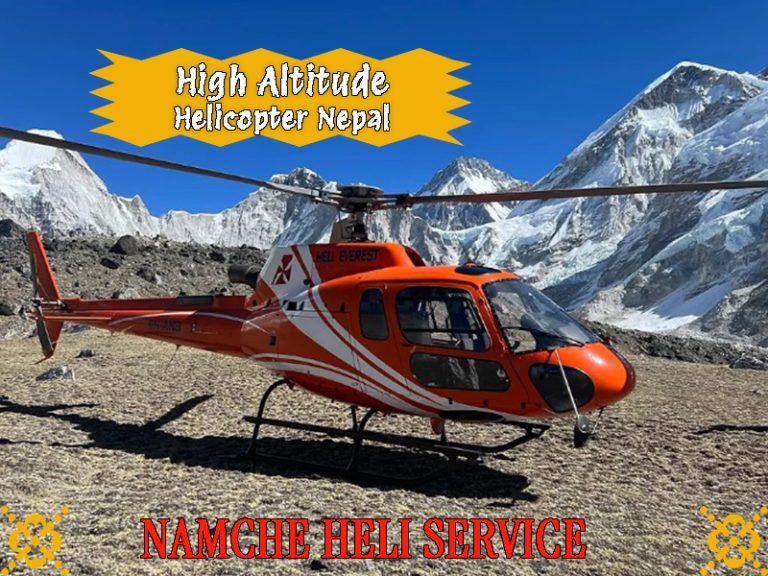
High Altitude Helicopter Nepal: Risks & Limits to Know
Anyone researching high altitude helicopter Nepal flights is either looking to book a scenic flight and want to know if the altitude itself is dangerous or they are already on the trail, wondering what happens…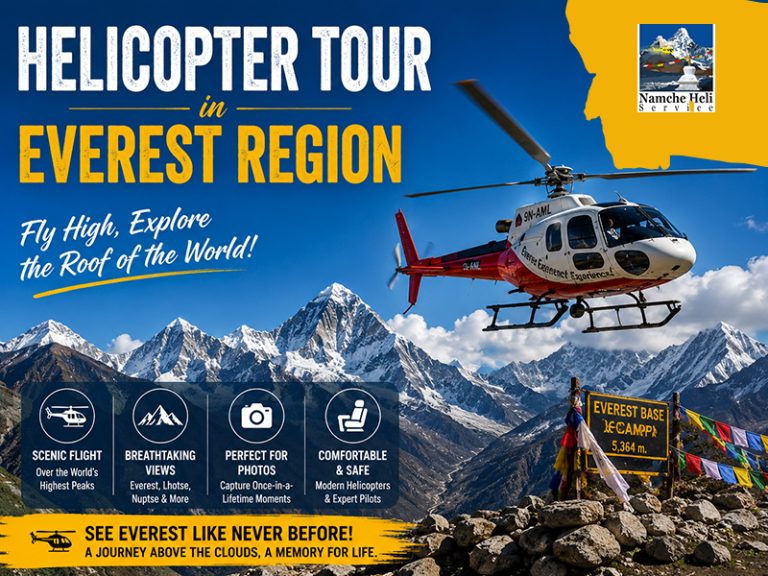
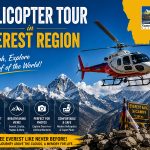
Helicopter Tour in Everest Region: A Complete Guide
A helicopter over the Khumbu covers in 45 minutes what takes a trekker two full weeks on foot! That gap is exactly why so many international travelers now build a helicopter into their Everest trip…