Trekking Helicopter Support Nepal: How the Safety Net Works
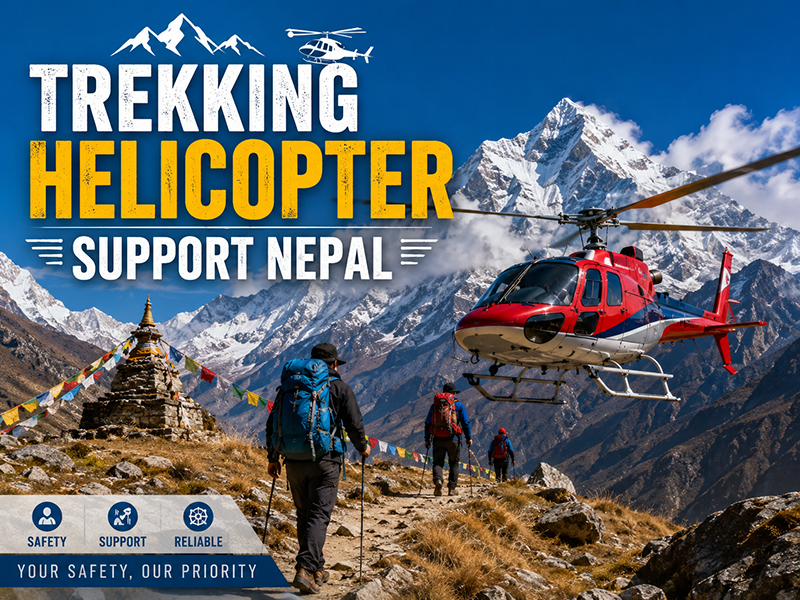
A headache above Dingboche can turn into a helicopter call within hours.
Most trekkers only start wondering how that process works once they are already on the trail. By then, it is too late to plan for it properly!
This guide covers Nepal’s trekking helicopter support directly. It explains what the term actually means and which regions have it. It also covers how a call for help reaches an aircraft once you are days from the nearest road.
Support Means Standby, Not a Scenic Flight
Helicopter support is a different service from a sightseeing tour, even though the aircraft look identical from the ground.
A support arrangement means an operator is on call. They are ready to fly for a medical evacuation, a rescue, or occasionally a supply drop. You do not book a time slot in advance!
Instead, you or your insurer contact the operator only once something happens. The aircraft then launches from Kathmandu, Pokhara, or Lukla, depending on where the nearest one sits that day.
A booked Everest helicopter tour or a fixed-schedule Everest Base Camp helicopter tour flies a known route at a known time. Both come with their own weight limits and pricing worked out in advance.
Support flights carry none of that structure, since nobody knows beforehand where the aircraft needs to go! Knowing the difference before you fly out saves confusion later, especially if a real emergency happens fast.
Which Trekking Regions Actually Have Coverage?
Helicopter support exists across most of Nepal’s major trekking regions, though Everest and Annapurna see the most traffic by far.
In the Khumbu region, operators fly out of Lukla and Kathmandu. They reach most points on the Everest Base Camp route within an hour or two under good weather.
Annapurna’s routes, including the Annapurna Circuit and Annapurna Base Camp trail, get served from Pokhara instead. It sits closer to those trailheads.
Langtang and Manaslu have thinner coverage, since fewer operators keep aircraft stationed near those regions full time.
Trekkers heading there should confirm with their agency which operator would respond, and roughly how far that aircraft has to fly first.
This is different from a planned Everest Base Camp trek with helicopter return, where trekkers walk in and fly out on purpose.
That trip usually finishes with a Lukla to Kathmandu helicopter leg booked well ahead of time. That is a pre-arranged flight, not a support call, even though the same operators often handle both!
How a Call for Help Actually Reaches a Helicopter?
Cell coverage exists at some villages, including Namche, Tengboche, and Dingboche. It is intermittent, though, and often disappears entirely above 4,000 meters.
Because of that gap, most rescue chains rely on a mix of tools rather than one phone call. Your guide is usually the first link!
They assess the situation, then reach out through whichever channel is available: a lodge telephone, a satellite device, or a radio connection to a Himalayan Rescue Association clinic.
HRA posts at Pheriche and Manang keep radio contact open to Kathmandu around the clock. Carrying a personal GPS tracker with an SOS function adds a useful backup layer, particularly on quieter routes where guides and lodges sit further apart.
The Insurance Step That Decides Everything!
Once a call goes out, the slowest part of the process is rarely the flight itself. It is confirming who pays.
Operators, incuding ourselves at Namche Heli Service, generally will not lift off without a guarantee of payment. That comes either from a travel insurer’s emergency line or a credit card guarantee while authorization gets sorted out.
This is why agencies push so hard on trekkers carrying valid, altitude-appropriate insurance before departure!
A policy that only covers altitudes up to 3,000 meters will not help much on a route that climbs past 5,000 meters. Some policies also exclude coverage if alcohol is involved, even a single evening beer at a teahouse.
So, it is worth reading the fine print rather than assuming standard travel insurance applies here.
What Actually Determines Response Time?
Weather is the single biggest variable, since helicopters in the Himalayas fly under visual conditions.
Cloud cover, wind, or an approaching storm can delay a flight regardless of how urgent the situation feels on the ground.
Morning flights generally fare better too, since calmer air and clearer visibility tend to give way to cloud by afternoon.
Distance from the nearest standby aircraft also matters. A rescue near Lukla or Namche typically moves faster than one deep in a side valley with no direct flight path.
In good conditions, a helicopter can reach the Everest or Annapurna regions within 45 to 90 minutes of being dispatched. Total time from the first call to actual pickup usually runs one to three hours once coordination is factored in.
The Routes These Support Flights Actually Fly
A handful of sectors come up again and again once a trekker needs to descend fast:
- A Pheriche to Lukla helicopter flight is one of the most common routes. Pheriche sits on the main trail at 4,371 meters, right where altitude sickness cases often surface.
- A Pheriche to Kathmandu helicopter flight skips the Lukla stop entirely when weather and weight allow it, moving the patient straight to hospital care.
- Further up the trail, a Gorakshep to Lukla helicopter flight covers a similar descent from near Everest Base Camp itself.
- A Gorakshep to Kathmandu helicopter flight handles the same job when the aircraft can skip the intermediate stop.
Which one your guide requests usually comes down to weather and how much weight the aircraft can carry that day. None of these routes need advance booking, since we at Namche Heli Service (as well as other operators) already know exactly where trekkers run into trouble most often.
What This Costs Without Insurance?
Without valid coverage, a rescue flight from the upper Khumbu back to Kathmandu or Lukla commonly runs USD 3,000 to 6,000.
Complex rescues involving poor weather, night flying, or a stretcher evacuation from a remote point can cost considerably more.
This is precisely the bill a properly matched insurance policy is meant to absorb, which is why we always confirm a trekker’s coverage details before discussing any support arrangement.
How We Support Trekkers at Namche Heli Service?
We keep our team reachable around the clock during trekking season. A guide or a trekker can reach us the moment something changes on the trail.
We coordinate directly with insurers wherever possible to confirm payment quickly. We can also talk your agency through exactly which aircraft would respond to your route before you even leave Kathmandu.
If you are planning a trek this season, send us your route and insurance details in advance. We will tell you honestly what coverage looks like along your specific trail, rather than a generic answer that applies everywhere.



Latest Blog Posts
Latest travel tips and blog covering all travel experiences
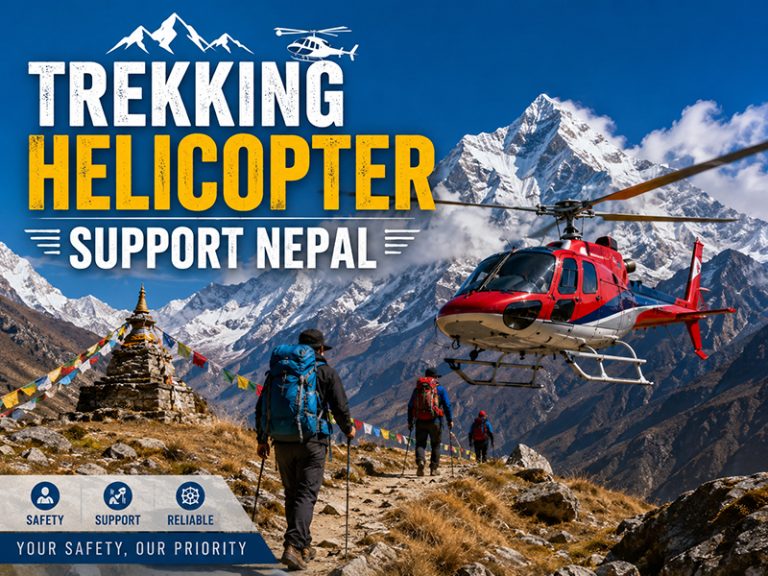
Trekking Helicopter Support Nepal: How the Safety Net Works
A headache above Dingboche can turn into a helicopter call within hours. Most trekkers only start wondering how that process works once they are already on the trail. By then, it is too late to…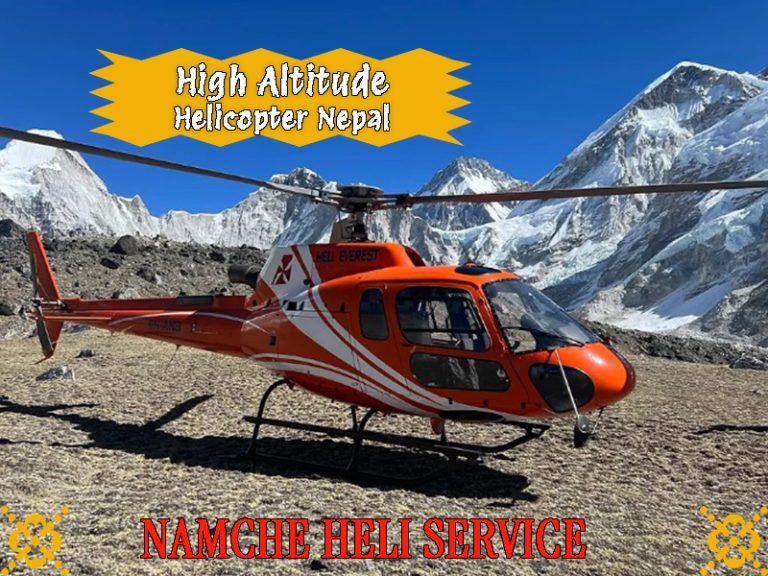
High Altitude Helicopter Nepal: Risks & Limits to Know
Anyone researching high altitude helicopter Nepal flights is either looking to book a scenic flight and want to know if the altitude itself is dangerous or they are already on the trail, wondering what happens…